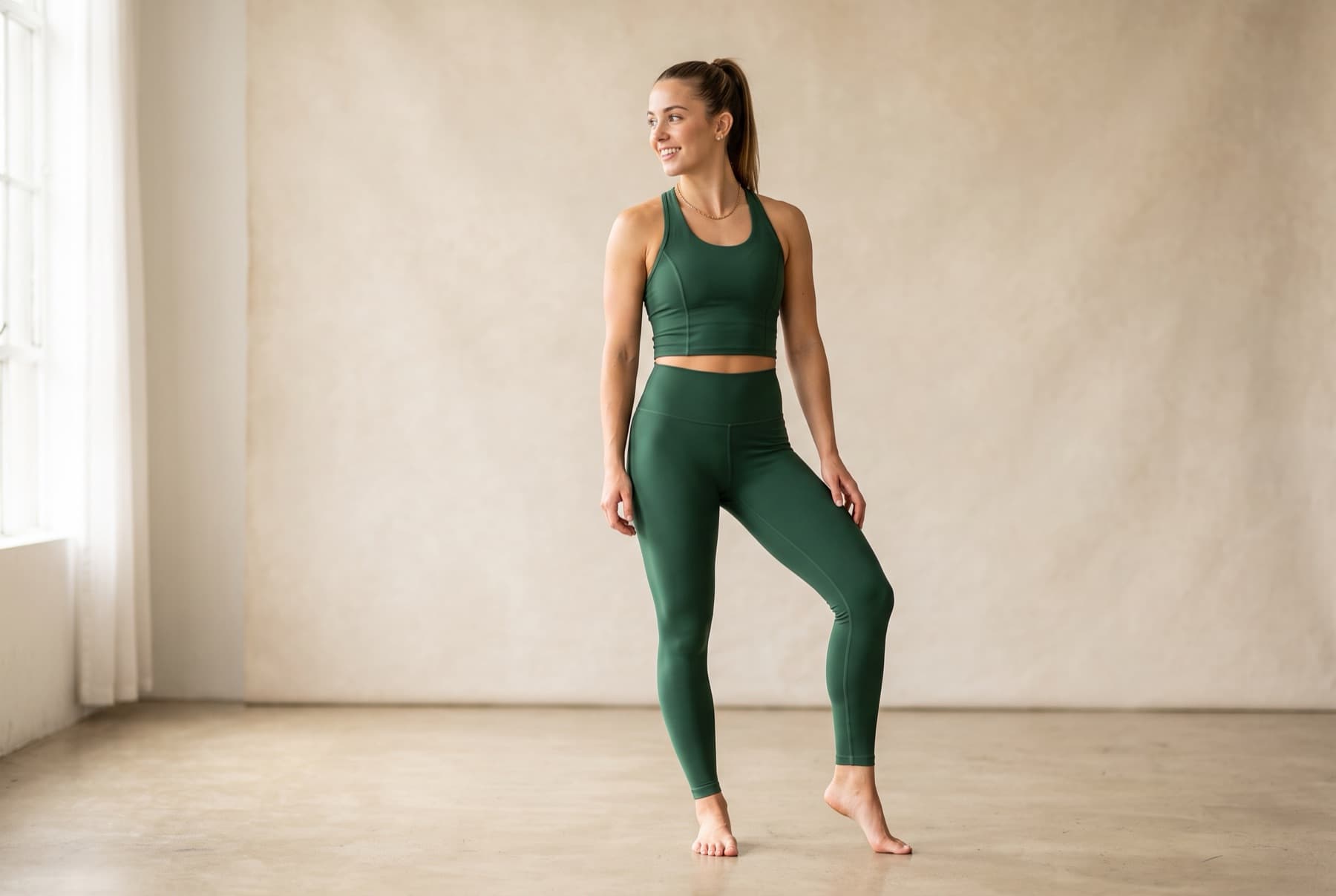
Activewear sells on two promises: fit and function. A shopper wants to see how leggings hold, how a jacket moves, how a technical fabric performs — and whether it looks good doing it. This guide covers how to photograph activewear for ecommerce: on-model and movement shots, glare-free lighting for technical fabrics, and colour you can trust.
What buyers look for in an activewear photo
- Fit on a real body — compression, stretch, coverage.
- Movement and performance — how it behaves in motion.
- Fabric texture and quality — technical knits, mesh panels, seams.
- True colour — bold brand colours are easy to get wrong.
- Relatability — does it look right on someone like me.
On-model is non-negotiable here
Activewear is one of the few categories where flat lay alone won't do. Fit and stretch are the product, and only a body shows them. Choose models who reflect your actual customers in size, age and fitness level — relatable beats "perfect," and inclusive casting builds trust in this category specifically. Make sure the garment fits the model precisely; baggy or ill-fitting activewear misrepresents the product.
Capture movement
Static shots undersell activewear. Show the garment doing its job:
- A model in a running, stretching or lifting pose signals performance.
- For leggings, a lunge or running stance shows elasticity and squat-proof coverage.
- Use a fast shutter speed (around 1/1000s or faster) to freeze motion crisply.
Movement frames are what separate an activewear listing from a plain apparel one.
Lighting for technical fabrics
Technical fabrics can reflect light in unflattering ways, so use soft, diffused light — softboxes or large diffused sources — to control glare while keeping the texture and colour honest. Bold brand colours shift easily under mixed light, so white-balance to a grey card and keep one setup across the range.
The shot list
- Hero on-model — front, straight-on, clean background.
- Back — coverage, seams, waistband, logo.
- Movement — a run, lunge or stretch that shows performance.
- Detail macro — fabric texture, mesh panels, flatlock seams.
- Lifestyle / context — gym, track or outdoor setting for the brand.
A clean neutral background works for the ecommerce shots; an active setting adds lifestyle context for hero frames.
Keep it authentic
Over-editing hurts activewear more than most categories — buyers disconnect from images that feel too polished. Keep skin, fabric and pose natural so the product looks trustworthy and real rather than airbrushed.
The fast way to get on-model and movement shots
Mistakes to avoid
- Flat lay only. Fit and stretch need a body.
- Glare on technical fabric. Diffuse the light heavily.
- Colour drift. White-balance so bold colours are true.
- Over-editing. Keep it natural and relatable.
- Static shots only. Add movement to prove performance.
Keep going
See the complete product photography guide for fundamentals, and menswear and shoes for the shot lists that complete an athleisure catalogue.