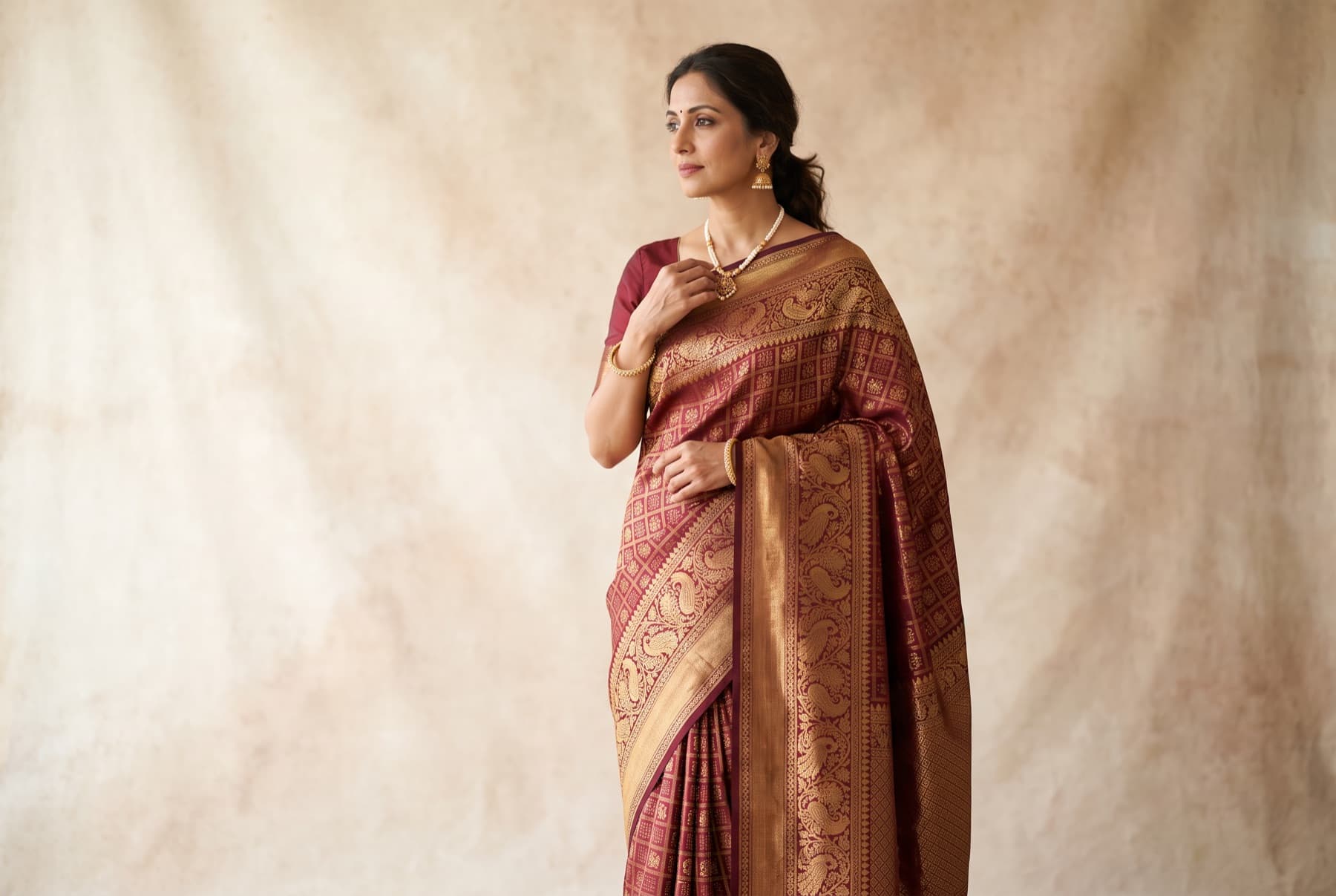
A saree is six yards of detail — border, pallu, body and fabric all matter to a buyer, and a flat photo hides most of them. Selling sarees online means showing true colour, the weave, and how the drape falls when worn. This guide covers how to photograph sarees for ecommerce so your listings answer every question a buyer has before they add to cart.
What buyers look for in a saree photo
- True colour — the hardest and most important thing to get right.
- Border and pallu detail — often the deciding factor in a purchase.
- Fabric and weave — silk, cotton, georgette and organza all read differently.
- How it drapes — the look when actually worn.
- Blouse piece — shown clearly if it's included.
The shot list
Include at least five images per saree:
- Full flat or draped body — the overall colour and layout.
- Pallu — the decorated end, shot close.
- Border — the full length of the edge work.
- Fabric texture — a macro frame that shows the weave.
- On-model or draped — how it sits when worn.
If a blouse piece is included, add a sixth shot of the unstitched fabric.
Lighting and true colour
Colour accuracy is everything with sarees, because a shopper is often matching to an occasion or existing pieces. Use soft, diffused light — a large window on an overcast day, or a softbox with diffusion — and avoid direct sun or on-camera flash, which blow out silk and shift the colour. Set white balance against a grey card so a maroon doesn't drift to red or a bottle-green to teal. Reflectors help bounce light into the folds and reveal the weave.
Showing the drape
The drape is what a flat lay can't show, and it's often what closes the sale.
- On-model is the gold standard — buyers see how the pleats sit, how the pallu falls and the overall silhouette.
- Mannequin draping is a solid middle ground: it shows the worn shape without a model shoot.
- Styled flat lay — arrange the pleats and fan the pallu so the fabric looks alive, not folded.
When you shoot a drape, highlight the pallu, the pleats and any zari or embroidery, and keep the folds soft so light reveals texture rather than flattening it.
The fast way to get on-model saree photos
Post-processing
Keep edits honest. Correct white balance and exposure so the colour matches the real cloth, sharpen enough to show the weave, and clean up dust or loose threads. Resist heavy saturation — an over-punched red that arrives looking different is a guaranteed return.
Mistakes to avoid
- Wrong colour. The top cause of saree returns. Always white-balance.
- Flat, detail-free frames. Buyers want the border and pallu up close.
- Harsh light on silk. Diffuse everything to control sheen.
- No worn shot. Drape, even on a mannequin, sells far better than a fold.
- Ignoring the blouse piece. If it's included, show it.
Keep going
Pair this with the complete product photography guide for lighting fundamentals, and see dresses and jewelry for adjacent shot lists that complete an ethnic-wear catalogue.